





The most common mistake Canadians make when arranging emergency response training is assuming the requirement is national. It is not, and the assumption produces a predictable outcome: a course completed, a certificate submitted, and an employer or licensing body that declines to accept it. Anyone considering online cpr certification canada needs to answer one question before anything else, which is who decides what counts for your specific situation.
That answer is rarely the training provider.
There Is No Single National Standard
Occupational health and safety in Canada is regulated at the provincial and territorial level. Each jurisdiction maintains its own first aid regulations, and those regulations differ in meaningful ways.
The exception is federally regulated industries, meaning sectors such as banking, telecommunications, interprovincial transportation, and federal public service, which fall under the Canada Labour Code instead. If you work in one of those sectors, your requirement comes from a different source than a colleague across the street in a provincially regulated workplace.
Ontario, British Columbia, and Alberta each administer workplace first aid requirements through their own frameworks, and what one accepts is not automatically accepted by another. Ontario in particular routes workplace first aid through a provincial approval process for training providers, which is worth knowing before purchasing anything.
Regulations are also periodically revised. Anything you read about provincial requirements, including this article, should be confirmed against the current regulation rather than treated as settled.
Four Different Bodies May Govern Your Requirement
Depending on your circumstances, the deciding authority is one of the following.
Provincial occupational health and safety regulation. This governs workplace first aid provision, typically scaling requirements to the number of workers, the hazard classification of the work, and the distance from medical services.
A professional college or licensing body. Nurses, paramedics, dental professionals, and others frequently face requirements set by their regulator rather than by their employer, and these often specify healthcare provider level training rather than community CPR.
A provincial licensing framework for a sector. Childcare and early learning programs commonly operate under provincial licensing that specifies staff certification, separate from general workplace regulation.
Your employer or insurer. Many organizations impose requirements exceeding the regulatory minimum, and fitness facilities and sports organizations frequently set standards through their insurers.
Identify which of these applies to you. If more than one does, the strictest governs.
Fully Online Versus Blended
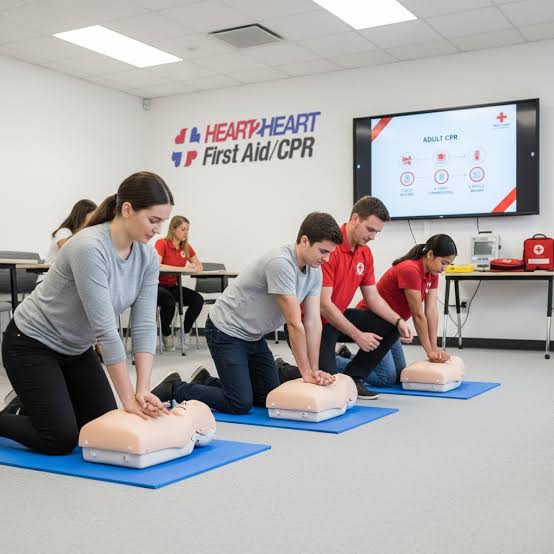
The practical distinction in the market is between courses completed entirely online and blended courses, where the knowledge component is completed online and a hands-on skills assessment is arranged separately.
Fully online completion suits general knowledge, personal preparedness, and some employer contexts. Regulated workplace and clinical requirements frequently call for demonstrated hands-on competency, because certain skills including compression depth and bag-mask technique cannot be verified through a screen.
Neither format is inherently superior. What matters is matching the format to what your governing authority accepts, and that is a question with a definite answer available before you spend anything.
Questions That Settle It Before You Pay
Send these to whoever will review your documentation, whether that is an employer, a program coordinator, a licensing body, or an insurer.
Does the requirement specify a particular level, meaning standard first aid, emergency first aid, or healthcare provider level? Does it require an in-person skills assessment? Does it require training from a provider approved by a specific provincial body? What validity period is expected before renewal?
Getting these answered in writing takes a short email and prevents the most expensive error in the process, which is paying twice.
What Online Delivery Genuinely Improves
Once the format question is settled, online delivery offers real advantages worth taking.
The knowledge component can be completed in segments around shift work and childcare rather than consuming a full day. Material can be reviewed repeatedly, which matters for retention. Rural and remote learners avoid travel that has historically been a genuine barrier to certification in much of the country.
For blended courses, only the skills session requires scheduling, which is a far smaller logistical problem than a full classroom day.
Moving Between Provinces
Certification earned in one province is not automatically accepted in another for regulated workplace purposes. If you are relocating or working across jurisdictions, confirm acceptance with the receiving province rather than assuming portability.
The same caution applies to certification earned outside Canada. It may be recognized, but confirm rather than assume, particularly for regulated healthcare roles.
Getting Started
Identify your governing authority, confirm the level and format it requires in writing, then choose a course that matches. Everything after that is scheduling preference.
For Canadians looking to certify or renew, Simple CPR offers course options built around these requirements with flexible scheduling. Visit the site to review formats and find the option that matches your province and your role.