




When you’re preparing products for shipment, bubble roll is one of the simplest ways to protect items from scratches, dents, vibration, and minor impacts. But how much bubble roll do you actually need? Using too little can leave products vulnerable, while using too much increases material costs and package size.
The right amount depends on the item’s size, shape, fragility, and the type of shipping box you’re using. In this guide, we’ll explain how to estimate bubble roll requirements, how to wrap different products, and how to avoid common packaging mistakes.
What Is Bubble Roll?
Bubble roll is a flexible packaging material made with air-filled pockets that provide cushioning around products. The trapped air helps absorb minor shocks and prevents items from rubbing against each other or directly contacting the walls of a shipping box.
Bubble roll is available in different:
- Roll widths
- Roll lengths
- Bubble sizes
- Thicknesses
- Perforated or continuous formats
Smaller bubbles are often suitable for lightweight items and surface protection, while larger bubbles can provide additional cushioning for larger or more fragile products.
How Much Bubble Roll Do You Need?
There isn’t one universal amount of bubble roll that works for every shipment. A useful starting point is to allow enough material to completely wrap the product with at least 2–3 layers of cushioning for ordinary items.
For fragile products, you may need 3–5 layers or more, particularly around corners, edges, and other vulnerable areas.
A simple way to estimate the amount is:
Bubble roll required = wrapping area × number of layers + additional material for overlaps
For example, if you’re wrapping a rectangular product that requires approximately 2 square feet of bubble roll for one complete layer, three layers would require roughly:
2 sq. ft. × 3 layers = 6 sq. ft.
You should then allow extra material for overlaps and securing the wrap.
A Simple Rule for Estimating Bubble Roll
For most everyday shipments, use this basic approach:
| Product Type | Suggested Bubble Roll Protection |
| Durable, non-fragile item | 1–2 layers |
| Moderately fragile item | 2–3 layers |
| Glass or ceramic | 3–5 layers |
| Electronics | 2–4 layers |
| Highly delicate items | Multiple layers + additional cushioning |
| Items with sharp edges | Extra protection around edges |
These are starting points rather than strict requirements. The actual amount should depend on the product and shipping conditions.
How to Calculate Bubble Roll for a Box
Before cutting your bubble roll, measure the product’s:
- Length
- Width
- Height
For a rectangular item, you need enough material to cover all sides while allowing the edges to overlap.
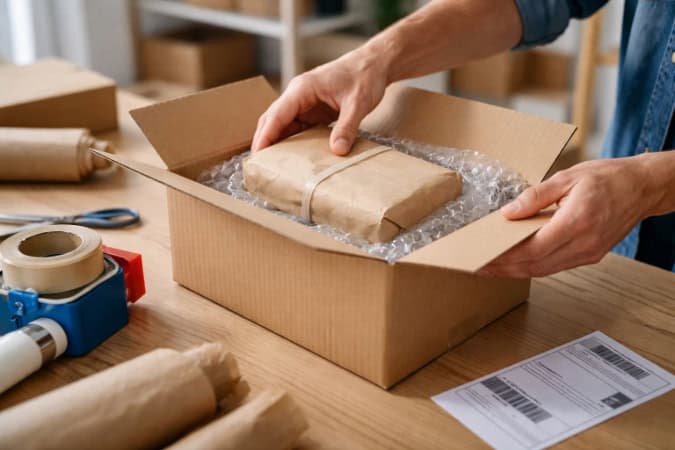
One practical method is to place the product on the bubble roll and roll it around the item. Add enough material at both ends so you can fold the bubble roll over the corners.
Example
Suppose you’re shipping a product measuring:
- 12 inches long
- 8 inches wide
- 4 inches high
Instead of cutting a piece that only covers the top and bottom, make sure the bubble roll can wrap around the entire product.
For a simple wrap, you can estimate the required length around the product as:
2 × (width + height)
In this example:
2 × (8 + 4) = 24 inches
Then add enough length for overlap.
For multiple layers, multiply the required wrapping length by the number of layers.
This approach gives you a useful starting estimate, although irregularly shaped products may require more material.
How Many Layers of Bubble Roll Should You Use?
The number of layers is one of the biggest factors affecting how much material you’ll need.
One Layer
One layer may be enough for products that aren’t particularly fragile and primarily need protection against scratches or surface contact.
Examples include:
- Plastic accessories
- Durable household products
- Some packaged components
- Non-fragile retail items
Two to Three Layers
Two or three layers are appropriate for many products that need moderate protection from handling and transportation.
Examples include:
- Small appliances
- Decor items
- Some electronics
- Wooden products
- Light fixtures
Three to Five Layers
Fragile items generally require more cushioning.
Examples include:
- Glassware
- Ceramic products
- Mirrors
- Decorative objects
- Sensitive electronics
For particularly fragile products, don’t rely on bubble roll alone. Combine it with void fill and a properly sized shipping box.
How Much Bubble Roll Do You Need for Fragile Items?
Fragile products require more than simply wrapping them in a thin layer of cushioning.
Start by completely covering the product with bubble roll. Add extra layers around:
- Corners
- Edges
- Handles
- Protruding sections
- Thin or vulnerable surfaces
The goal is to create a protective cushion between the product and the outside environment.
For glass or ceramic products, consider individually wrapping each item before placing multiple pieces inside a box. If several items are shipped together, use additional cushioning between them.
Don’t Forget the Corners and Edges
Corners are often among the most vulnerable parts of a product.
A common mistake is to wrap the main surface adequately but leave corners exposed. During transportation, boxes can be dropped, stacked, or pushed against other packages. A corner impact can transfer force directly to the product.
When wrapping an item:
- Cover the entire product.
- Fold the bubble roll around the corners.
- Overlap the material where necessary.
- Add additional cushioning to vulnerable areas.
- Secure the wrap with packaging tape.
Avoid compressing the bubbles excessively because damaged or flattened bubbles provide less cushioning.
How Much Bubble Roll Do You Need for Different Products?
Different products require different levels of protection.
Clothing and Soft Goods
Clothing usually doesn’t require bubble roll because the products are already flexible and resistant to impact.
If you’re protecting a clothing package from moisture or abrasion, another packaging material may be more appropriate.
Electronics
Electronics can benefit from bubble cushioning because they may be vulnerable to impacts and vibration.
Use enough bubble roll to completely surround the item, paying particular attention to corners and screens. If the product is sensitive to static electricity, use appropriate anti-static packaging materials when required.
Glassware
Glass products generally require multiple layers of protection.
Wrap individual pieces separately and use additional cushioning to prevent them from touching each other. Leave enough space between the wrapped item and the shipping box walls for additional cushioning.
Ceramics
Ceramic products should be wrapped individually whenever possible.
Pay particular attention to:
- Handles
- Thin edges
- Decorative sections
- Corners
- Protruding parts
Small Appliances
Small appliances often benefit from two or more layers of bubble cushioning, depending on their construction and weight.
If the item is heavy, make sure the shipping box and internal cushioning can withstand the product’s weight.
Decorative Items
Decorative products can vary dramatically in fragility. A solid wooden decoration may need minimal cushioning, while a delicate ornament may require several layers.
Assess the most vulnerable part of the product rather than applying the same amount of bubble roll to every item.
How to Know if You’ve Used Enough Bubble Roll
A properly wrapped product should have cushioning on all sides.
Before sealing the shipping box, check:
- Is the entire product covered?
- Are corners protected?
- Are fragile sections reinforced?
- Can the product move inside the bubble roll?
- Is there enough cushioning between the product and the box walls?
- Can multiple products contact each other?
- Does the box close without crushing the contents?
If the answer to these questions is yes, you may need additional packaging protection.
Bubble Roll Alone Isn’t Always Enough
Bubble roll provides cushioning, but it shouldn’t automatically be treated as the only protective material needed.
For fragile shipments, combine bubble roll with suitable void-fill materials such as:
- Kraft paper
- Air pillows
- Foam
- Corrugated inserts
- Packing paper
The objective is to prevent the product from moving around inside the box.
Why Product Movement Matters
Even if an item is completely wrapped, excessive movement inside a box can increase the chance of damage.
Imagine a glass item wrapped in bubble roll but surrounded by several inches of empty space. If the box is dropped, the item can move through that space and experience a significant impact.
A properly packaged shipment keeps the product securely positioned.
Choose the Right Shipping Box
The amount of bubble roll you need is also influenced by the box you choose.
A box that’s too large can require:
- More bubble roll
- More void fill
- More tape
- More labor
- More shipping space
A box that’s too small may compress the protective material and put pressure on the product.
Ideally, choose a box that provides enough room for:
Product + bubble roll + additional cushioning + reasonable clearance
The goal isn’t to use the largest box available. It’s to use the smallest practical box that safely accommodates the product and its protective materials.
Should the Bubble Side Face In or Out?
For many standard applications, placing the bubbles toward the product provides cushioning directly against the item, while the flat side faces outward.
However, the best configuration can depend on the product, packaging application, and the type of bubble material being used.
The most important thing is to ensure the item is fully protected and the bubble cushioning isn’t excessively compressed.
How to Reduce Bubble Roll Waste
Using too much material can increase packaging costs. Fortunately, several simple practices can help reduce waste.
Measure Before Cutting
Instead of estimating by eye, measure the product first. This makes it easier to cut pieces that are large enough without creating excessive waste.
Use Perforated Rolls
Perforated bubble rolls can make it easier to tear off consistent sections without cutting every piece manually.
Standardize Packaging
If your business ships the same products regularly, create standard wrapping sizes for each product category.
For example:
- Small products → Small bubble roll section
- Medium products → Medium section
- Large products → Large section
This can reduce material waste and speed up fulfillment.
Reuse Clean Bubble Roll When Appropriate
Clean, undamaged bubble cushioning can sometimes be reused for suitable shipments.
Avoid reusing material when the bubbles are significantly flattened, torn, contaminated, or otherwise compromised.
How Much Bubble Roll Should You Buy?
If you’re buying bubble roll for a business, don’t calculate your purchase based solely on one shipment.
Instead, consider:
Average shipments per month × average bubble roll used per shipment
For example, if you ship 500 packages per month and use an average of 4 feet of bubble roll per package:
500 × 4 = 2,000 feet per month
You can then add a reasonable amount for waste, damaged material, and variations in product sizes.
This gives you a more practical estimate of your monthly packaging requirements.
Bubble Roll Buying Checklist
Before purchasing bubble roll, consider:
- What types of products are you shipping?
- How fragile are the products?
- What bubble size do you need?
- What roll width is most practical?
- How many packages do you ship each month?
- How much material does each package typically require?
- Do you need perforated sections?
- Will you use additional cushioning?
- What storage space do you have?
- How much packaging waste can you reasonably manage?
Buying based on your actual shipping requirements can help prevent both shortages and unnecessary inventory.
Common Bubble Roll Packaging Mistakes
Using Too Little Material
Insufficient wrapping leaves products vulnerable to impacts and abrasion.
Using Too Much Material
Excessive wrapping increases material usage without necessarily improving protection.
Leaving Corners Exposed
Corners can be vulnerable during transportation, so they shouldn’t be overlooked.
Choosing an Oversized Box
A large box creates more room for product movement and requires more void fill.
Not Testing the Packaging
If you’re shipping a new product, conduct packaging tests before sending large quantities.
Test whether the product remains secure after normal handling and whether the packaging provides sufficient protection.
How to Determine the Right Amount for Your Business
The best approach is to develop a simple packaging standard for each product.
For every product category, record:
- Product dimensions
- Product weight
- Recommended bubble roll layers
- Bubble roll size
- Required wrapping dimensions
- Recommended shipping box
- Additional cushioning requirements
- Estimated packaging cost
This creates a repeatable packaging process and makes it easier for employees to package orders consistently.
Frequently Asked Questions
How many layers of bubble roll should I use for shipping?
For many ordinary products, two to three layers provide a useful starting point. Fragile items may require three to five layers or additional cushioning. The exact amount depends on the item’s fragility and shipping conditions.
Is one layer of bubble roll enough?
One layer may be adequate for durable products that primarily need surface protection. Fragile products generally need additional cushioning.
Should I use bubble roll for glass items?
Yes, bubble cushioning can help protect glass items, but fragile glass should also have adequate void fill and a sturdy shipping box. Individual wrapping is recommended when shipping multiple pieces.
Can I use too much bubble roll?
Yes. Excessive material can increase packaging costs, package dimensions, and storage requirements. The goal is sufficient protection rather than maximum material usage.
How do I calculate bubble roll for multiple products?
Estimate the amount needed for one product, multiply it by the number of products, and add extra material for overlaps, irregular shapes, and waste.
What is better for shipping: small or large bubbles?
The appropriate bubble size depends on the product. Smaller bubbles can work well for lightweight items and surface protection, while larger bubbles generally provide more cushioning for larger or more fragile products.
Does bubble roll prevent all shipping damage?
No packaging material can guarantee that a product will never be damaged. Bubble cushioning reduces the risk of impact and abrasion, but the shipping box, void fill, product placement, and overall packaging design also matter.
Final Thoughts
Knowing how much bubble roll you need helps you strike the right balance between product protection, packaging costs, and shipping efficiency. Start by considering the product’s dimensions and fragility, then determine the appropriate number of layers and leave enough room for additional cushioning when necessary.
For businesses that regularly ship products, creating standardized packaging guidelines can make the process faster, more consistent, and less wasteful. Choosing the right bubble roll, corrugated shipping boxes, and other packaging supplies can also help protect products throughout the shipping process.
Starboxes offers packaging solutions designed to help businesses find practical materials for their shipping and packaging needs. By choosing the right combination of protective cushioning and appropriately sized boxes, you can create a more reliable packaging process while keeping material usage under control.