





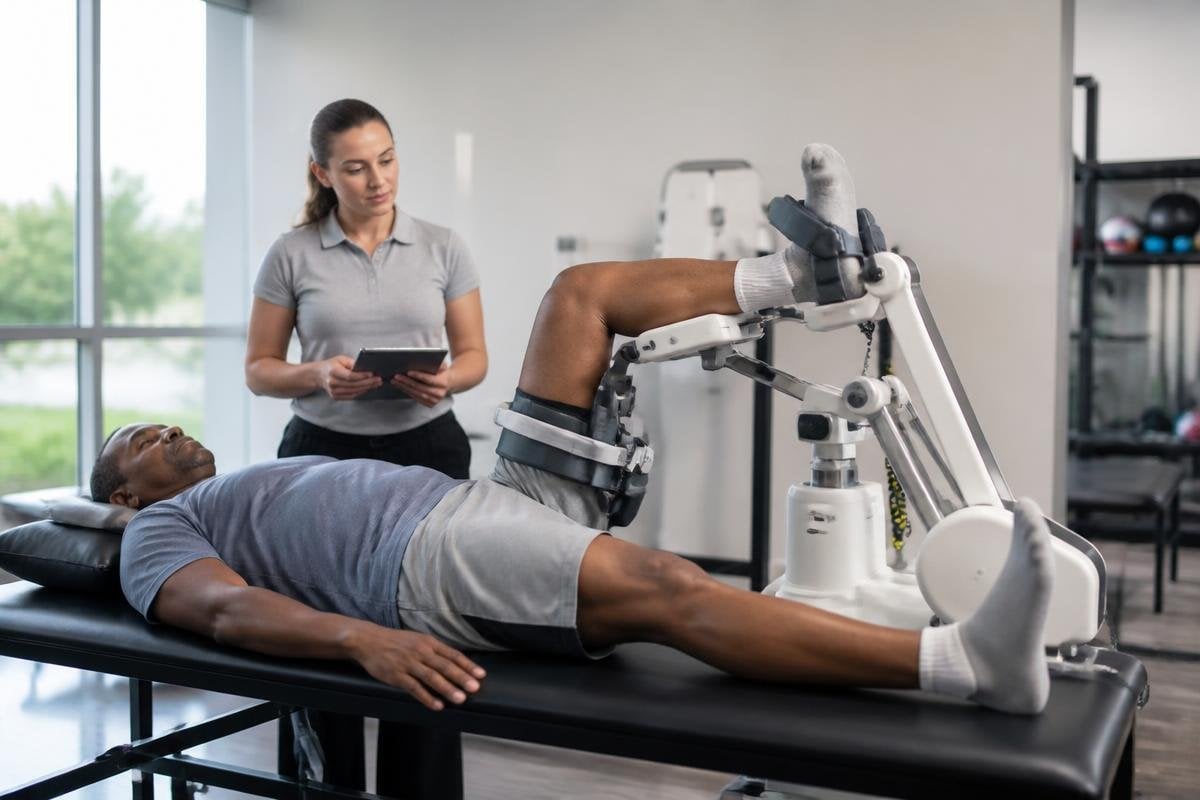
A therapy robot may guide a leg through the same motion hundreds of times, while a therapist watches how the patient responds. That could give clinics a steady way to repeat exercises without asking a person to lift, hold, or move the limb each time.
- Robotic braces can support walking practice
- Sensor data can show changes in movement
- A therapist still sets the plan and checks progress
Where robots fit in a therapy session
Physical therapy depends on repeated movement. A patient may need to bend a knee, shift weight, reach for an object, or take steps with less support. Robots can guide those actions and adjust the amount of help as the exercise changes.
A robotic brace, known as an exoskeleton, sits around part of the body and uses motors to help a joint move. A treadmill system may support some of a person’s weight while the legs practice stepping. A robotic arm can guide the hand through a path during upper-body work.
The useful part is control. A therapist can set the speed, range of motion, or level of support, then watch the patient instead of doing every repetition by hand. The robot follows the set limits, but the therapist decides when those limits should change.
What the sensors add
Movement alone does not tell the whole story. A therapy robot can use sensors to record joint angle, force, speed, or how much weight reaches each foot. That information gives the clinician another way to check whether a movement is changing from one session to the next.
A patient who takes longer steps may still be leaning heavily on the support. A person who reaches farther may be using too much shoulder movement. Sensor readings can point to those details, but they still need a clinician to interpret them in the context of pain, balance, fatigue, and the patient’s goals.
Reports on robots used in physical therapy can tie a machine’s claims to its clinic, task, and test date, then show where a clinician still makes the call. That record leads into the medical limits, where more movement data can’t replace a treatment plan.
The limits are medical, not only technical
A robot can repeat a motion, but repetition alone does not make a treatment suitable. Pain, swelling, weakness, balance problems, and fear of falling can change what a patient should do on a given day. A fixed exercise plan may need to stop or change quickly.
Safety also depends on the connection between the robot and the person. A loose brace can shift. A wrong joint setting can put force in the wrong place. A software fault, sensor error, or loss of power needs a clear response that the patient and clinician can follow.
Cost and space matter too. A large walking system may need a dedicated room, staff training, and regular maintenance.
A smaller sensor kit may fit more clinics, but it may give less physical support. The right choice depends on the task, the patient, and the clinic’s staff and floor space.
What a clinic should check
Before buying or testing a therapy robot, ask:
- Name the task: Which movement will the robot help with, and what can the patient do without it?
- Set the handoff: Who stops the session when pain, fatigue, or poor balance appears?
- Check the record: Can staff read the motion and force data without extra software work?
- Measure the change: Which patient result will show that the treatment is helping?
- Plan the upkeep: Who handles fitting, cleaning, repairs, and software updates?
These questions keep the purchase tied to patient care. They also expose a common mistake: buying a machine for its range of motion before deciding which clinical problem it needs to solve.
What comes next
The strongest use of robotics in physical therapy will likely be shared work. The robot can handle repeatable movement and record the session, while the therapist handles judgment, communication, and changes to the plan.
I’d judge a therapy robot by the patient’s progress after the machine is removed, not by how smooth the session looks. The useful proof will be simple: patients who can walk, reach, or move with less help after a measured course of care.