


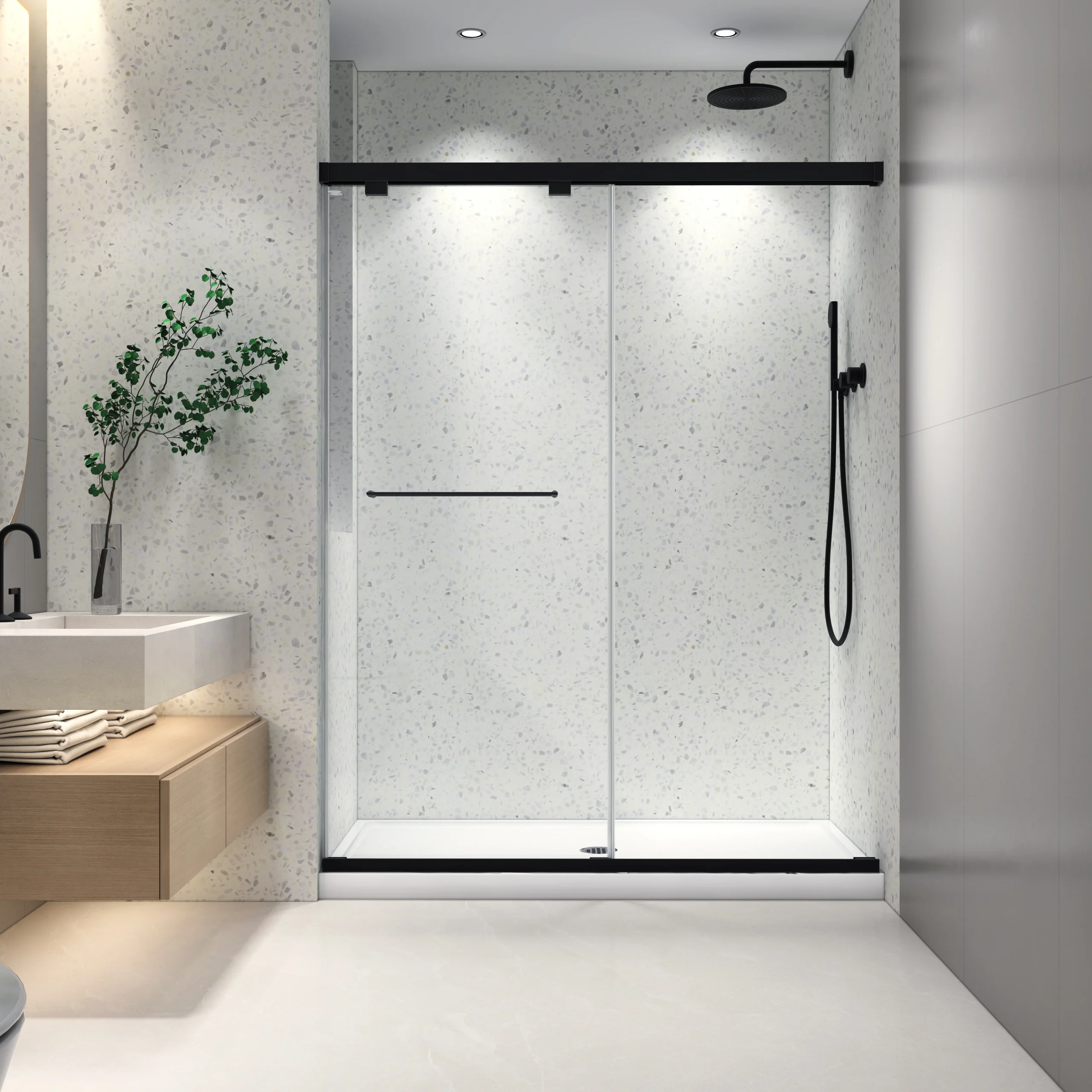
Shopping for glass shower doors often comes down to picking a style that fits the bathroom’s layout, frameless, sliding, or hinged, without much thought given to what’s actually inside the glass and hardware. That’s a mistake, because the difference between a door that holds up for a decade and one that starts leaking or clouding within a year or two usually has nothing to do with the style chosen.
Glass Thickness and Tempering
Tempered glass is standard for shower doors for a straightforward safety reason: if it breaks, it shatters into small, relatively blunt pieces instead of large shards. Thickness matters too. Doors in the 3/8-inch (roughly 10mm) range are common for frameless designs because the glass itself needs to provide structural support without a full frame around it. Thinner glass, often used in framed or semi-frameless doors, relies more on the surrounding frame for stability and tends to flex slightly more over time.
A coating on the glass, sometimes marketed under different brand names, is worth asking about separately from thickness. These treatments reduce how quickly hard water deposits and soap scum build up on the surface, which affects how often the door actually needs scrubbing rather than just wiped down.
Hardware Is Where Doors Actually Fail
Most complaints about shower doors trace back to hardware, not the glass itself:
- Hinges. Cheaper hinges corrode or loosen within a couple of years in a consistently humid environment. Stainless steel or solid brass hinges with a sealed bearing hold up considerably better.
- Rollers and tracks. On sliding doors, the roller wheels and track are the parts most likely to wear out. Smooth-gliding, sealed rollers reduce the grinding or sticking that develops as mineral deposits accumulate.
- Seals and sweeps. The bottom seal and side sweeps are what actually keep water inside the shower. These wear out faster than the glass or hardware and are worth checking on any door before assuming a leak means a full replacement is needed.
- Handle and finish. Chrome, brushed nickel, and matte black are the most common finishes, and matching them to existing fixtures in the room matters more for resale value than people expect.
Frameless, Semi-Frameless, or Framed
Frameless doors give the cleanest look and are easiest to keep looking modern over time, since there’s less metal trim to develop water spots or corrosion. They’re also typically the most expensive option and require precise installation, since the glass itself is doing structural work that a frame would otherwise handle.
Semi-frameless doors use a partial frame, usually along the hinge side, which brings the cost down while keeping most of the open, minimal appearance. Fully framed doors are the least expensive option and the easiest to install, though the frame does require more regular cleaning to prevent buildup in the metal channels.
None of these is the correct choice for every bathroom. A frameless door in a shower with hard water and no exhaust fan will need more upkeep than the style alone suggests, regardless of price point.
Installation Considerations
Shower door installation is less forgiving than most other bathroom fixtures because the opening has to be measured precisely, and even small deviations in wall plumb or floor level can cause a door to fit poorly or fail to seal. A professional measurement and installation is usually worth the cost for frameless doors specifically, since the panels are custom-cut and can’t be easily trimmed after the fact like a framed unit sometimes can.
The Takeaway
Choosing between frameless, semi-frameless, and framed glass shower doors is largely a matter of budget and bathroom style, but the details that determine whether a door holds up over time are the ones buyers tend to skip past: glass thickness and tempering, hardware quality, and seal condition. Comparing options across retailers, including Allsumhome, is worth doing on those specifics rather than on style alone, since two doors that look nearly identical in photos can perform very differently after a year of daily use.