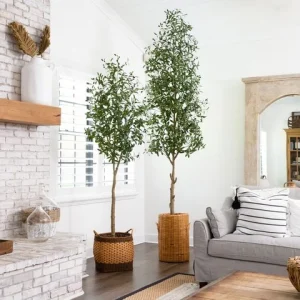



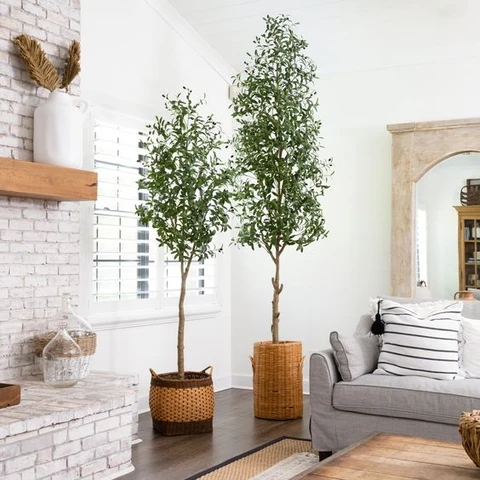
Large faux trees indoor spaces can instantly add height, texture, and visual interest without the maintenance that comes with live plants. But choosing the wrong size can make a room feel cramped, unbalanced, or visually awkward. The right artificial tree should complement your ceiling height, furniture, floor area, and overall decorating style.
Whether you’re decorating a spacious living room, office, entryway, bedroom, or commercial space, this guide will help you choose the right large faux trees indoor for your specific space.
Why Size Matters When Choosing an Indoor Faux Tree
An artificial tree is more than a decorative accessory. Because of its height and volume, it can become one of the largest visual elements in a room.
A tree that’s too small may disappear beside large furniture or high ceilings. On the other hand, a tree that’s too large can overwhelm the room and make walkways feel narrow.
Before buying, consider:
- Ceiling height
- Available floor space
- Furniture size
- Tree height and width
- Pot or planter dimensions
- Natural light levels
- Placement and traffic flow
- Overall interior design style
The goal is to create proportion and balance, not simply fill an empty corner.
How Tall Should an Indoor Faux Tree Be?
A useful starting point is to consider the relationship between the tree and your ceiling.
For 8-foot ceilings
Trees around 5 to 6.5 feet tall generally work well. They provide enough height to create a vertical focal point without making the ceiling feel lower.
For smaller rooms, a tree closer to 5 feet may be more appropriate.
For 9-foot ceilings
You have more flexibility. Trees around 6 to 7.5 feet can create a strong visual presence while leaving comfortable space above the foliage.
For 10-foot or higher ceilings
Larger trees can help fill vertical space that might otherwise look empty. Consider trees around 7 to 9 feet, depending on the room’s size and furniture.
For double-height or vaulted ceilings
This is where oversized faux trees can really make an impact. A 9- to 12-foot artificial tree may be appropriate for a large room with significant vertical space.
However, don’t choose the tallest tree available simply because you have a high ceiling. The tree should still relate to the furniture and overall proportions of the room.
A Simple Height Formula
When you’re unsure about the ideal height, think about the amount of visual space between the tree and ceiling.
You generally don’t want the tree’s foliage pressed against the ceiling. Leaving some breathing room can make the arrangement look intentional rather than crowded.
For example:
| Ceiling Height | Suggested Tree Height |
| 8 ft | 5–6.5 ft |
| 9 ft | 6–7.5 ft |
| 10 ft | 7–8 ft |
| 11–12 ft | 7–9 ft |
| 12+ ft | 8–12 ft+ |
These are starting points rather than strict rules. The tree’s canopy width and shape also matter.
Don’t Forget the Width
Height gets most of the attention, but width can be just as important.
A 7-foot tree with a wide, spreading canopy can take up considerably more floor and visual space than a narrow 7-foot tree.
Before purchasing, measure:
- The available floor area.
- The maximum width you can accommodate.
- Nearby furniture.
- Walking paths.
- Door and cabinet clearance.
- The planter’s footprint.
If you’re decorating a narrow corner, consider a tall artificial tree with a slimmer silhouette rather than a wide, bushy design.
How to Choose Large Faux Trees for Living Rooms
The living room is one of the most popular places for large artificial trees.
Empty corner
A tall faux tree can transform an unused corner into a deliberate design feature.
Position it beside:
- A sofa
- Media console
- Bookshelf
- Accent chair
- Side table
A larger tree works particularly well when the surrounding furniture has substantial proportions.
Beside a sofa
When placing a faux tree next to a sofa, avoid choosing one that is significantly wider than the furniture arrangement unless you want it to become the primary focal point.
A medium-to-large tree can provide height while maintaining visual balance.
Near a window
Artificial trees can look particularly natural near windows because the placement mimics where a real plant might grow.
However, don’t assume an artificial plant must sit directly in front of the window. Positioning it slightly to one side can preserve natural light while adding greenery to the room.
Choosing a Faux Tree for Small Rooms
You don’t need a huge room to enjoy a large-looking artificial tree.
The key is choosing the right silhouette.
For smaller rooms, consider:
- Narrow trunks
- Upright growth patterns
- Smaller canopy widths
- Taller, slimmer profiles
- Simple planters
Avoid extremely wide canopies if your floor space is limited.
A narrow 6- or 7-foot tree can create the impression of height without consuming too much floor space.
Large Faux Trees for Entryways
An entryway is an excellent location for a tall artificial tree because vertical greenery can make the area feel more welcoming.
If you have a spacious foyer, an oversized tree can create an impressive first impression.
For smaller entryways, select a narrow tree that doesn’t interfere with:
- Door movement
- Coat storage
- Shoe cabinets
- Hallway traffic
- Stair access
Always measure the walkway before placing a large faux tree near an entrance.
How to Choose the Right Tree for an Office
Large artificial trees can soften an office environment and introduce visual texture without requiring regular watering or sunlight.
For an office, consider trees with:
- Clean, structured shapes
- Neutral planters
- Moderate foliage density
- Professional-looking finishes
A tall faux tree can work well in:
- Reception areas
- Conference rooms
- Waiting areas
- Executive offices
- Open-plan workspaces
For commercial settings, be especially careful about walkways and accessibility. Decorative greenery should enhance the space without creating an obstruction.
Matching Tree Size to Furniture
Furniture scale should influence your decision.
A tiny accent chair paired with an enormous artificial tree can look disproportionate. Similarly, a large sectional may overpower a small faux plant.
Consider the visual relationship between:
Tree height + canopy width + furniture height + room dimensions
For example, a large sectional sofa may benefit from a substantial tree positioned nearby, while a compact loveseat may look better with a slimmer tree.
Should You Use a Large Planter?
The planter contributes to the overall size of the arrangement.
A large faux tree placed in a tiny decorative pot can look unstable or visually underwhelming. Conversely, an oversized planter can make a tree appear heavier than necessary.
Choose a planter that:
- Supports the tree’s proportions
- Complements your décor
- Has enough visual weight
- Doesn’t dominate the foliage
- Fits the available floor area
You can also place an artificial tree in a decorative basket or larger planter to create a more finished appearance.
Consider the Tree’s Canopy Shape
Different artificial trees create different visual effects.
Upright trees
Best for:
- Narrow corners
- Small apartments
- Hallways
- Offices
Wide, spreading trees
Best for:
- Large living rooms
- Open-plan spaces
- Large entryways
- Commercial interiors
Layered or branching trees
Best for:
- Contemporary interiors
- Minimalist rooms
- Spaces where the tree serves as a focal point
Dense foliage trees
Best for:
- Filling large empty areas
- Creating privacy
- Adding visual softness
Think about the shape of the room, not just the available height.
Measure Before You Buy
One of the easiest ways to avoid choosing the wrong artificial tree is to measure the space first.
Use a measuring tape to determine:
- Ceiling height:
Measure from the floor to the ceiling. - Available width:
Measure the maximum width the tree can occupy. - Depth:
Don’t forget how far the foliage will extend into the room. - Walking clearance:
Make sure people can comfortably move around it. - Furniture clearance:
Check that branches won’t interfere with furniture, doors, drawers, or cabinets.
A useful trick is to mark the intended tree footprint on the floor using painter’s tape. This gives you a visual idea of how much space the planter and foliage will occupy.
Think About Visual Weight
Two trees with the same height can look completely different.
A tree with dense, dark foliage may feel heavier than one with sparse, lighter leaves. A wide canopy will also have more visual weight than a narrow silhouette.
If your room already contains bold furniture, artwork, or patterned décor, a simpler faux tree may work better.
If the room feels plain or empty, a fuller artificial tree can become an attractive focal point.
Popular Placement Ideas for Large Faux Trees
Here are some locations where large artificial trees can make an impact:
1. Empty living room corners
Fill unused vertical space without adding another piece of furniture.
2. Beside a fireplace
Create a softer contrast against hard architectural surfaces.
3. Behind a sofa
Add height and greenery to an otherwise empty background.
4. Near a staircase
Tall greenery can complement high ceilings and vertical architectural features.
5. Office reception areas
Create a welcoming environment for visitors.
6. Bedroom corners
Add softness without requiring natural sunlight.
7. Dining areas
A tall tree can frame the dining space and provide visual separation in open-plan homes.
8. Retail or commercial interiors
Large artificial trees can help define zones and enhance the customer experience.
Common Mistakes to Avoid
Choosing a tree without measuring
A product can look appropriately sized online but appear dramatically different in your room.
Ignoring canopy width
Don’t focus only on the listed height. Check the full dimensions.
Blocking natural light
A large tree placed directly in front of a window can make a room feel darker.
Creating a walkway obstruction
Avoid placing large trees where people regularly walk.
Choosing a tree that’s too small
A small artificial plant may disappear in a large room with high ceilings.
Overcrowding the space
Don’t add a huge tree simply because you have an empty corner. Consider the entire room composition.
How to Make Large Faux Trees Look More Realistic
Once you’ve selected the right size, styling can make a major difference.
Try these techniques:
- Fluff and separate individual branches.
- Adjust leaves into natural-looking positions.
- Rotate the tree until its best side faces the room.
- Use a realistic planter.
- Add decorative moss or natural-looking filler at the base.
- Avoid arranging every branch symmetrically.
- Position the tree where a real plant could naturally grow.
The goal isn’t perfection. Slight irregularity often makes artificial greenery appear more natural.
Frequently Asked Questions
What is the best height for a large faux tree indoors?
For many standard homes, 6 to 8 feet is a practical range. However, the ideal height depends on your ceiling height, room dimensions, furniture, and the tree’s canopy.
Can I put a large faux tree in a small room?
Yes. Choose a narrow, vertically oriented tree rather than a very wide one. This gives you height and greenery without taking up excessive floor space.
How much space should I leave around a large artificial tree?
Leave enough room for comfortable movement around the tree and make sure branches don’t interfere with doors, furniture, or walkways. The exact clearance depends on the location and layout.
Are tall artificial trees suitable for offices?
Yes. They can add greenery and soften professional environments without requiring natural light or regular watering.
Should an artificial tree touch the ceiling?
Generally, no. Leaving some visual space between the top of the tree and ceiling usually creates a more balanced appearance, although very tall trees can work in rooms with high or vaulted ceilings.
How do I know if a faux tree is too big?
If the tree blocks walkways, overwhelms furniture, obstructs windows, makes the ceiling feel lower, or dominates the entire room, it’s probably too large for the space.
Final Thoughts
Choosing large faux trees indoor spaces doesn’t have to be complicated. Start by measuring your ceiling height, floor area, available width, and walking clearance. Then consider the tree’s canopy, planter, foliage density, and relationship to your existing furniture.
The best artificial tree isn’t necessarily the tallest or fullest option. It’s the one that fits naturally into your room while adding the right amount of height, greenery, and visual interest.
For a wide selection of realistic artificial greenery and decorative options, Fake Flowers can be a useful place to explore faux trees and other artificial plants for different interior spaces.